
I recently read a post on Facebook acknowledging that those of us who grew up in past decades did not have the guardrails or helicopter parenting that today’s youngsters enjoy. But their discussion question went deeper than drinking from the hose, or staying outside all day till night fell. They started the post with:
“What thing(s) did you do as a child that were dangerous? Really dangerous, like CPS – Child Protective Services – should-be-called, dangerous?” The responses were all good or should I say BAD. One person said he and his friends walked along raised train trestles and waited for a train to come barreling up, testing their skill and bravery. Another played with his father’s gun and bullets and a third cited blowing up things with fire crackers. But I think I can top all these. First of all, a disclaimer. My parents were in no way negligent or abnormal by the standards for child care prior to 1970, and my husband backs me up, as he too had similar responsibilities as a child of the 60s.
I grew up in a small wood-frame house with ten siblings and two parents. On any given day for any of a dozen reasons our power would go out. All of it, throughout the whole house. No TV. No lights. No fan. A chorus would ring out, “Who blew the fuse?” It was usually apparent who the culprit was. One sister was ironing her school blouse, when a brother inserted two slices of Wonder Bread in the toaster. Or the TV blaring and a stereo coming from the brothers’ room, when sister #3 plugs in her Hot Roller set, to get ready for her date.
The next course of action was that someone had to trek down the creaky wood steps into the basement, with a flashlight, make his/her way back to the furthest musty corner where the small electric box hung. On the side of the box was a single pull-down lever, used to cut the power.
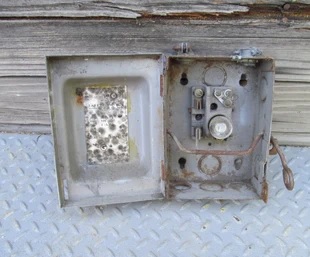
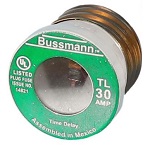
I’m not sure how old I was the first time I changed a fuse, but I think as soon as you were tall enough to reach the box you could do it. The only advice I got was someone yelling, “Don’t forget to turn off the power.” This is so crazy. If I had forgotten to turn off the power, I wouldn’t be here today typing this. But I knew the drill. The 30 Amp screw-in fuses should be in a small box on top of the metal electric box. If there were none left, you had to go to plan B. Walk to the corner grocery store to buy fuses. I think they cost about 50 cents for a box of four. Then back to the basement and the offending box. First you pull the power lever, open the little door, unscrew the old fuse and toss it. (If you got lazy and put the bad fuse back in the box it would only come back to bite you when you tried to use it the next time, thinking it was good.) Next you screw in the new fuse, close the door and flip the breaker back on. But you weren’t officially done until you heard the chorus of voices above you cheer when the TV came back.
Several months ago, while my husband and I were on a road trip we swapped stories of changing blown fuses when we were kids. He said they had two boxes, each with one fuse, first floor and second. (Their home used to be a two-family apartment. ) His Mom’s only advice as he ventured to the basement, was “Don’t forget to cut the power, or you’ll get kilt.”
It all sounds so insane. A ten or twelve year-old child up close and personal with a live electric conduit. One mistake, and our families would have been minus one child. But we did all live to adulthood, and as the saying goes, “No harm, no foul.”
My time of putting my life on the line for the common good ended in 1967, when, due to necessity, our father hired an electrician to come in and replace some wiring, add some new plugs and install a new electric box with multiple fuses to screw in, one for each section of the house. The new Kenmore electric dryer got a fuse all of its own. And we, the children, those of us still living with our parents in the small wood-frame house on Third Street, no longer risked our very lives so our family could have electricity.


 Logos
Logos 